When running a leadership program for 25 leaders, there will be diversity in the room - experience, technical background, knowledge, and communication styles.
I recently completed such a program, which began early last year.
The cohort is a mix: some were being prepared for new leadership responsibilities, some have led teams for years, and others are Project Managers constantly bouncing between crews.
Initially, we ran an exercise from the Leadership Journal called The Return On Effort (ROE) Diagnostic. The results mapped out the group's current strengths:
Some were experiencing success on the base of their Analytical Ability - success through Strategy.
Others through their Technical Strength - success through Skills and Frameworks.
And the last group were Socially Strong - success through Principles.
As we moved into breakout groups to discuss the findings, one participant pulled me aside. "I think all the 'socially strong' people are in the wrong group,".
Charisma Does Not Equal Social
I immediately saw what he was observing.
The charismatic, extroverted"life of the party" types weren't in the social group. Instead, the Social group had many introverted, quiet, and seemingly "sheepish" characters.
This is a common mistake we make in business. We confuse charisma with social skill.
In leadership, true social skill has nothing to do with being soft, silky, or colourful. It has everything to do with principles. These "quiet" leaders showed a profound ability to make decisions based on a set of proven principles - even if they hadn't been aware of them until they entered the room.
We often think charisma is important. Charisma is a nice-to-have; likeability and confidence is helpful. But operating on a strict diet of strong and intentional principles is a real difference-maker.
Principles For The Win
A HR Leader once shared her mantra with me: "Is it right? Is it fair?" Brilliant.
Another favourite comes from hospitality legend and one of my entrepreneurial heroes, Danny Meyer. He simply asks: "Who wrote the rule?" when faced with a status quo situation.
Something so simple is a great starting point.
Principles don't have to be complex. You can borrow them, iterate on them, or create them as you go. While I have a formula to base them on, ultimately the most important thing is simplicity:
Are they helpful?
Are they meaningful?
Do they guide you when you're under pressure or in crisis?
If you don't have a catchphrase or mantra to keep your mind on track, start building it now.
The "rockstars" of charisma and storytelling might win the job interview or get a few laughs, but don't confuse this with true Leadership Social Strength - aka. Strong Principles.
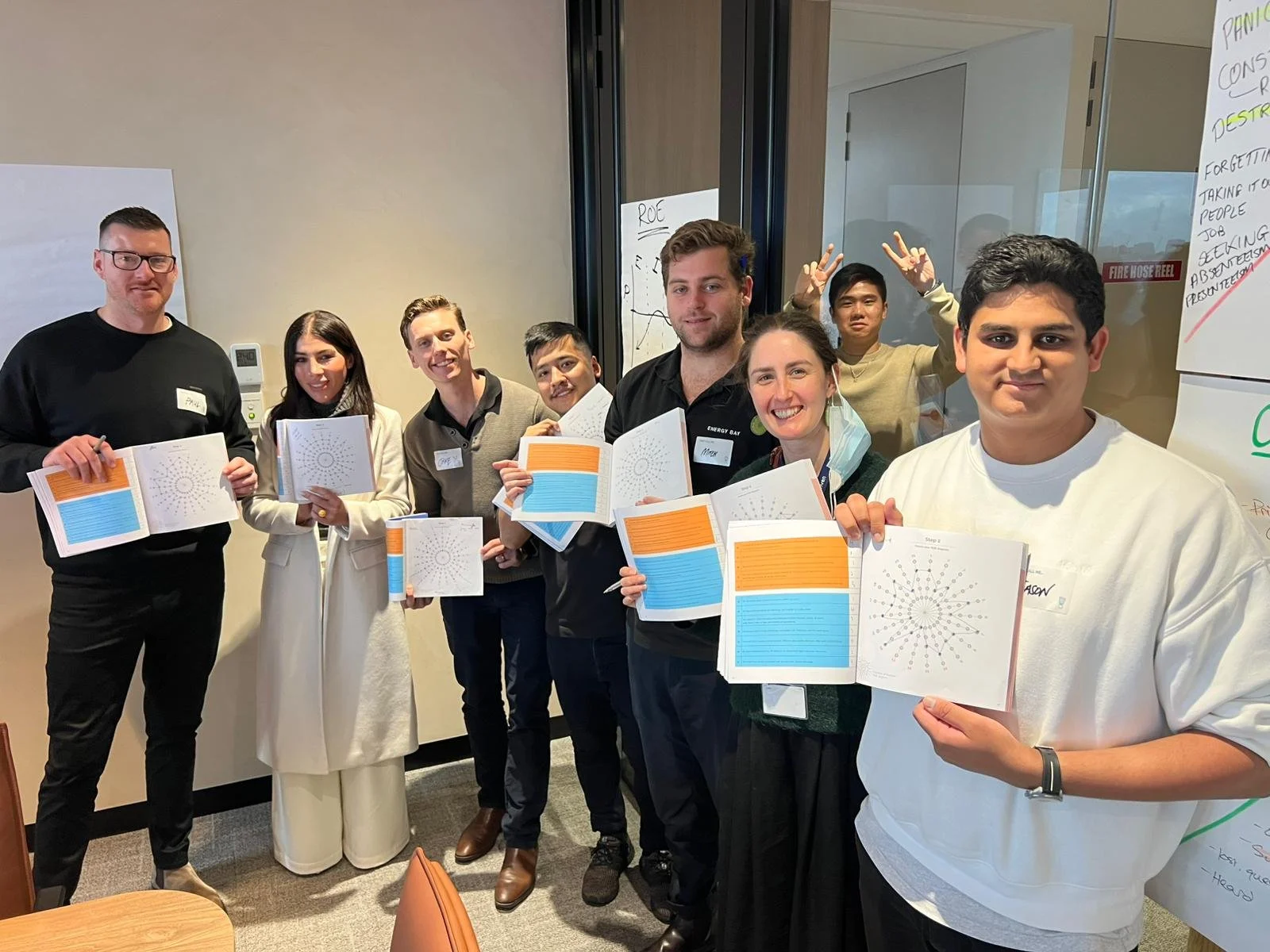
Participants working through the ROE Diagnostic in my Core Leadership Program. Here, they learn and apply the Principles, Practices, and Programs of Progress required to become the trusted and respected leaders they can and want to be. An enthusiastic passer by adds to the vibe.
Why It Works
When my job is on the line, or worse, when people's safety is on the line, I don't want a slick talker. I want someone I'd trust my family with. I want someone I respect. That's it.
It always boils down to two questions:
Can you be trusted?
Do they respect you?
Business throws many complex challenges at us every hour. Our ability to make sound decisions, protect business interests, and balance competing priorities is tested constantly.
Modern business is too complex for rigid rules. Rules break under pressure.
Principles are dynamic. They adapt to whatever challenge is in front of you while keeping your moral compass centered.
A strong Social Game is a critical part of leadership, but it has everything to do with your principles and nothing to do with your charisma. Understanding this doesn't just change how we see our teams - it changes how we see ourselves.
That's why every single person in the "Socially Strong" group belonged exactly where they were.