Why 'High Performance' Is a Trap
Listen to my summary or read the full article below.
If I gave you a brand new Ferrari, would you take it?
[Most definitely]
What if I said I'd trade it for your primary car?
[Still, most definitely]
What if I said I'd trade it for your primary car and it was the only vehicle you and your family could use? And no - you cannot sell it to bank the profit!
[I really want to have it. I'd love to have it. But...]
What would stop us from taking the Ferrari? Is it the lack of seat, head, leg, or boot space?
Is it because it would bottom out leaving the driveway and scraping over speed humps every day?
Maybe you live on a street where it would have to be parked on the road and exposed to theft or damage?
Would you worry about the unwanted attention it draws?
Or hesitate because of the eye-watering costs of servicing, fueling, or repairing it when (not if) it breaks down...
The list goes on as to why a Ferrari as an everyday vehicle is a deeply unattractive prospect.
It isn't practical, fit-for-purpose, or financially viable as a family or work car.
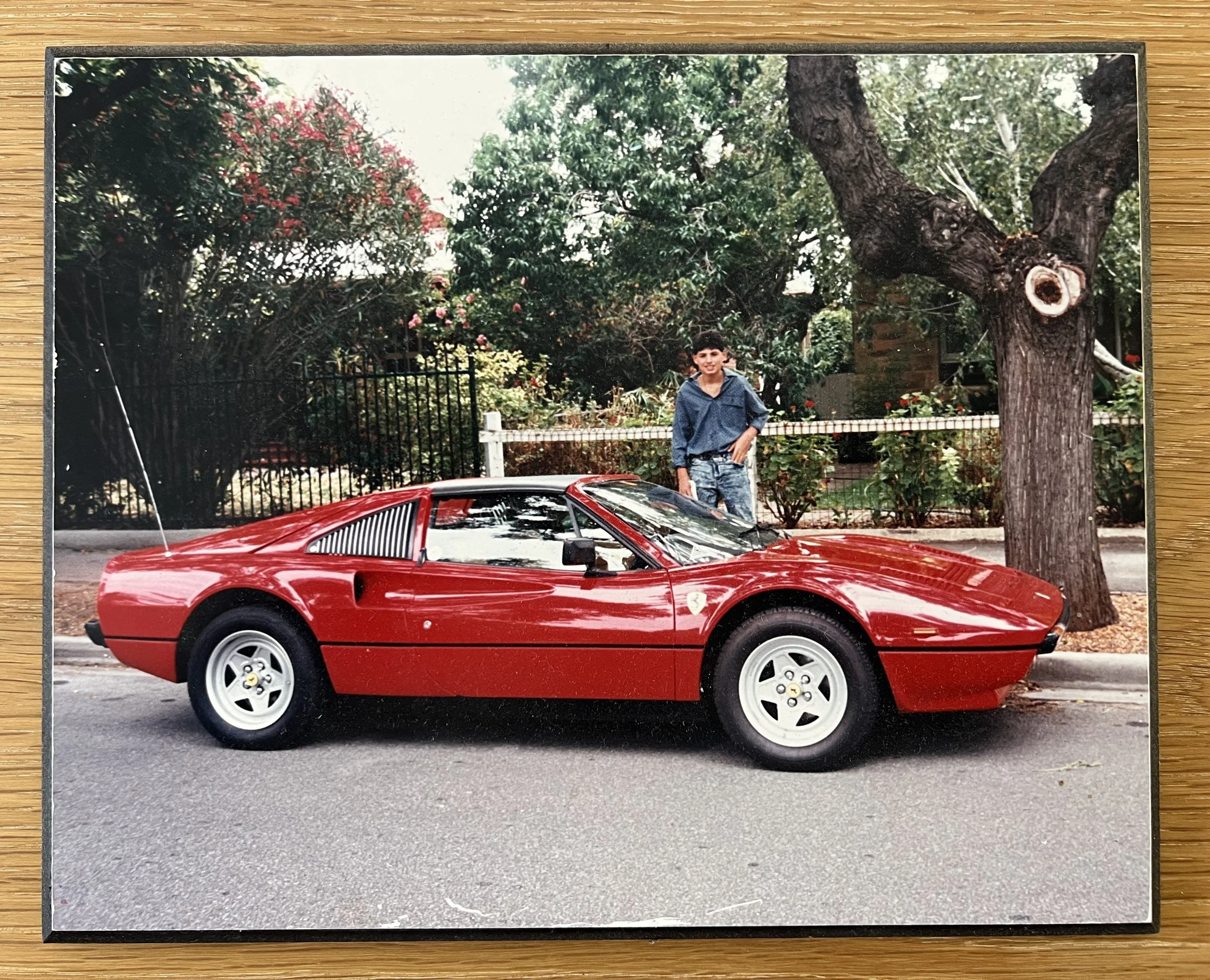
When I was a teenager out and about with my mum, we spotted a Ferrari parked on the street. Mum said, "Paul, go stand next to it - I'll take a photo." I thought it was a silly thing to do, but I did it anyway.
Somehow, that photo ended up printed, framed and hung on the wall! I despised it at the time and thought the whole thing was strange. (To this day, I still have it.) Life is funny like that.
But looking back, I realise that Ferrari represented an extreme anomaly - one of only about 300,000 registered on the road globally. They are unicorns.
And chasing unicorns in business isn't always a great idea. Just like that supercar, high-performance cultures look thrilling from the outside, but living with them day-to-day is a completely different story.
The Problems With High Performance Cultures
I've played, coached, and worked in high-performance cultures (HPCs). To put it bluntly: they suck.
Yes, they are exciting, and living 'on the edge' is exhilarating and can pull results out of you and your team you never thought were possible. But behind the hype, HPCs are littered with fundamental flaws:
1. Make It Rain
HPCs are astronomical in cost. The average Premier League wage sits at £3.1m per year. (Salary Leaks). Australia invests approximately $187.5m across its current four-year Olympic cycle (ASC, AOC, State Institutes). In the AFL, men's player salary caps exceed $18m per squad, with coaching and support staff caps adding nearly $8m more. (CricketTaken).
Does your company genuinely want to spend the capital required to support a true HPC?
Is it realistic to demand high-performance results if you are not willing to fund top-tier talent and infrastructure at that scale?
2. Pure Anxiety
A retiring Olympian once explained how daily life since early adolescence had been riddled with chronic anxiety - constantly doubting and questioning if they were under- or over-resting, eating, or training. Even grabbing a coffee with a friend felt like a high-stakes decision.
On top of that, players across the board live under constant threat of getting cut, surviving year-to-year (or month-to-month) never knowing if your career is about to end. Add in injuries, factors outside their control, and a steady conveyor belt of younger hungrier competitors aiming for their spot.
Do you really want your team living under existential threat?
Can an environment driven by existential threat sustainably bring out anyone's best work?
3. Inevitable Failure
HPCs exist purely to win - yet very few actually do. In pursuit of victory, every micro-action, strategy, and skill is picked apart under extreme scrutiny. No matter how well someone performs, the default feedback is that it could have been done better.
And that is if you ever make it at all. The NCAA (American College Sport) estimates that only 1 in 10,000 college basketballers reach the pros (NCAA). That's 0.01%. Of those who make it, the median career lasts just 2-3 years (Medium). HPCs routinely leave the vast majority of people and organisations on the scrap heap.
Are you willing to invest so heavily in such a high-risk model?
Can you and your people truly thrive under relentless scrutiny?
The Problem With Mediocre
On the flip side, most workplaces settle into mediocrity - the chief frustration of most leaders.
These are the places where people punch the clock, tick boxes, cut the occasional (and not so occasional) corners. Everyone is constantly busy, but very little of value gets done. Internal friction between individuals, departments, and leadership tiers is the baseline norm. The sort of place that drives most of us mad.
This is usually the core problem leaders try to solve. Mediocre performance carries costs and risks no board or executive team wants to carry. It is energy-sapping and uninspiring.
Naturally, leaders view HPCs as the obvious antidote to eradicate mediocrity. But as we've seen, the Ferrari is not all it's cracked up to be.
What's Left?
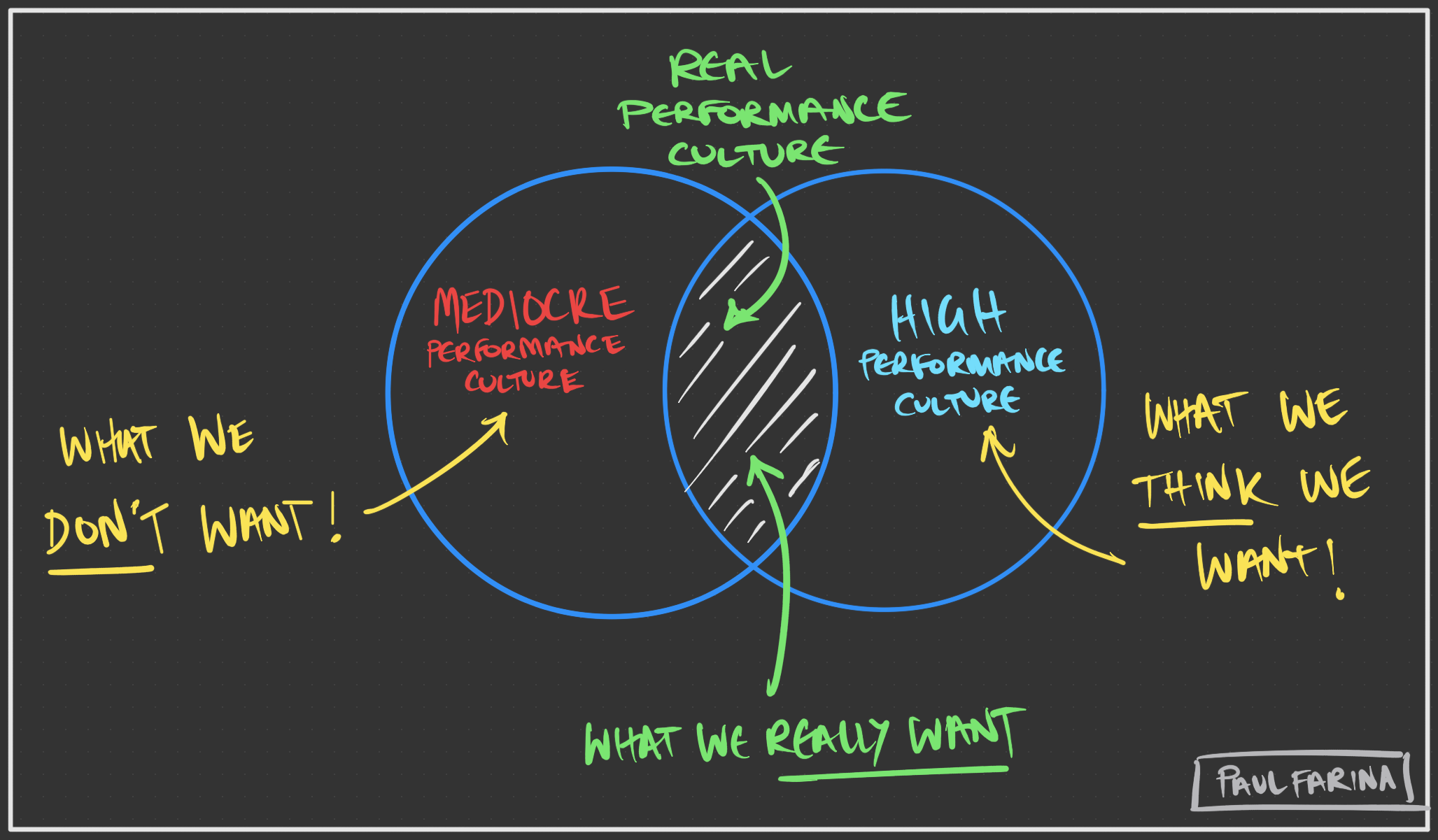
If mediocre is damaging and high performance brings more problems than it solves, what is left?
A few years ago, I coined the term Real Performance Cultures (RPCs).
Writing in Psychology Today (May, 2026), Organisational Psychologist and Professor at Vanguard University Dr. Ludmila Praslova highlighted how traditional HPCs are often riddled with fear, silence, rigid control, and incentives to game metrics rather than build sustainable progress.
In contrast, Real Performance Cultures foster psychological safety, honesty, room to learn from mistakes, autonomy, exploration, and sustainable work.
Think of an RPC as the Toyota or Kia of workplace cultures. It might not turn heads, make a big scene, or get the heart racing on a racetrack - but it lasts, delivers safely and economically, and runs with minimal friction.
It is the practical, high-value alternative to both mediocrity and burnout.